
Post Details

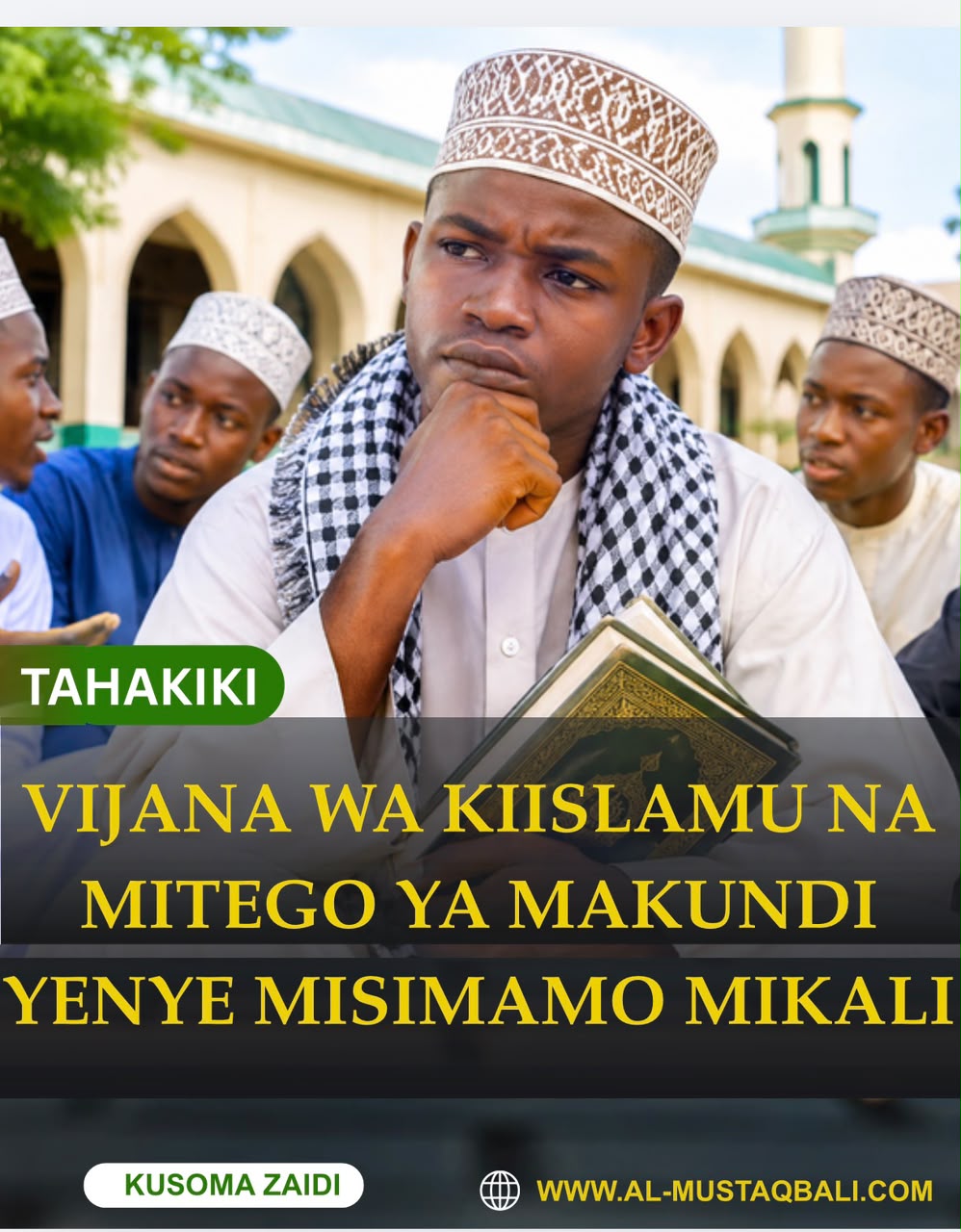

MUSLIM YOUTH AND THE TRAP OF EXTREMIST GROUPS
By Iddy Juma Mzee
Young people are the strength, hope, and foundation of any society's development. In Islam, youth is a great blessing from Allah (S.W.T.), which should be used to worship Allah, seek knowledge, engage in good deeds, and contribute positively to society. However, in today's world, some Muslim youth face the challenge of being lured into extremist groups that misuse the name of religion to spread hatred, violence, and acts of brutality.
These groups often target young people facing economic, social, educational, or religious challenges. They attract them with promises of a better life, identity, recognition, and religious rewards. Some manipulate verses of the Holy Qur'an and Hadiths of Prophet Muhammad (peace and blessings be upon him) to justify their actions while concealing the serious consequences of their extremist ideologies.
The Holy Qur'an teaches us the importance of moderation and avoiding excessiveness in religion. Allah (S.W.T.) says:
"O People of the Scripture! Do not go to extremes in your religion." (Surah An-Nisa 4:171).
This verse provides an important lesson that religious matters should be approached with proper guidance and understanding, without exceeding the limits set by Allah. Furthermore, Allah (S.W.T.) says: "And thus We have made you a moderate nation." (Surah Al-Baqarah 2:143). This demonstrates that Islam promotes justice, moderation, and a balanced way of life, far removed from extremism.
Similarly, the Holy Qur'an strongly condemns the unlawful killing of innocent people. In Surah Al-Ma'idah 5:32, Allah (S.W.T.) explains the seriousness of killing a person without justification, stating that it is as though one has killed all humanity. This teaching should guide young Muslims to understand that taking the lives of innocent people is not a way of defending Islam; rather, it contradicts its fundamental principles.
Another challenge is the use of social media as a platform for spreading propaganda and recruiting young people. Through messages, videos, and provocative discussions, some groups promote hatred against people with different opinions, religious leaders, and society at large. The Qur'an warns us against following matters without knowledge. Allah (S.W.T.) says in Surah Al-Isra 17:36: "And do not pursue that of which you have no knowledge."
Therefore, young Muslims must be careful about the teachings they receive, verify the sources of information, and seek guidance from recognised Islamic scholars known for their knowledge, wisdom, and integrity.
Families, mosques, educational institutions, and community leaders also have an important responsibility to provide young people with sound Islamic education, development opportunities, and platforms where they can discuss their challenges. They should be taught that differences in opinions must never become a reason for hatred, hostility, or bloodshed.
In conclusion, Muslim youth must understand that defending Islam does not mean joining groups that promote violence. Rather, it means living according to the authentic teachings of the Qur'an and Sunnah, protecting human life, promoting peace, and upholding justice. Islam is a religion of mercy, justice, and good morals. Every young Muslim therefore has a responsibility to become part of the solution to society's challenges, rather than a source of conflict and instability.
0 Comments